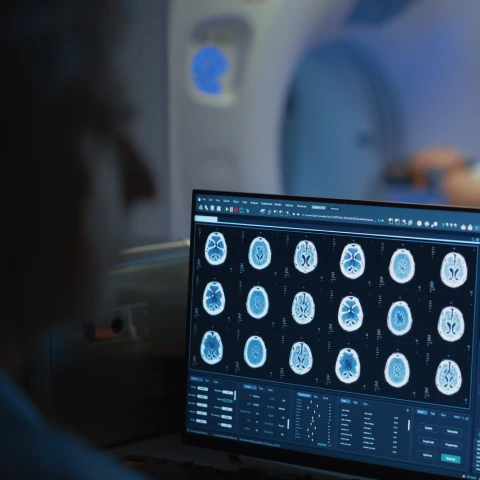


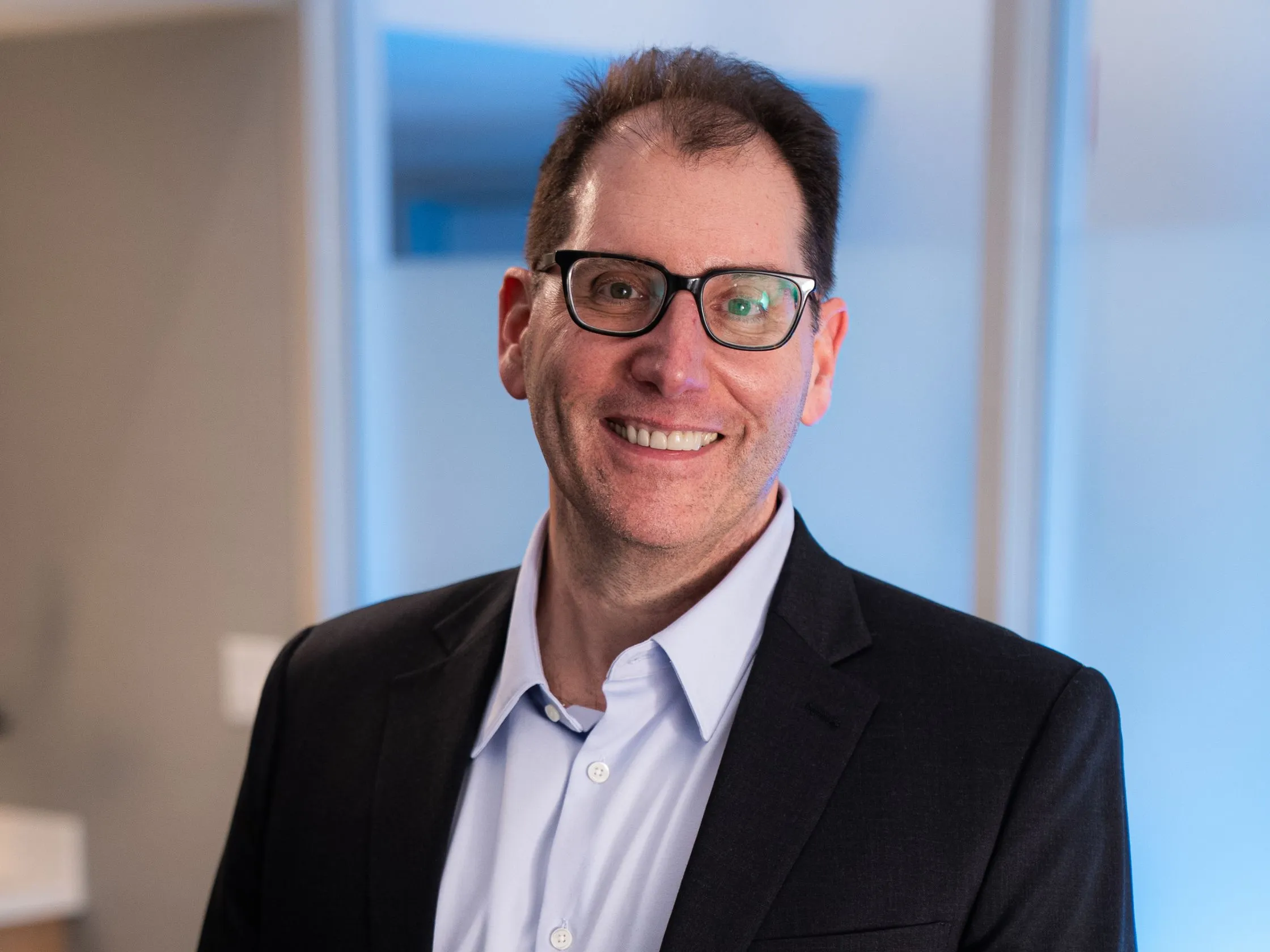
Radiologists do most of their work behind the scenes, but at Prenuvo, our exclusively-affiliated radiologists can have a direct impact on the member experience. Through the reports they create and the findings they identify, radiologists help translate thousands of MRI images into clinically meaningful information to discuss with healthcare providers. We spoke with Dr. Alex Adduci, M.D., Associate Vice President of Radiology at Prenuvo U.S., who leads the organization's U.S. radiology practice. He talked to us about how radiologists are trained to identify subtle findings on scans, why MRI is an important tool for the future of proactive health, and how radiologists can serve as a dedicated player on your healthcare team.
The following interview has been lightly edited for clarity.
Prenuvo: For anyone that doesn’t fully understand the role of a radiologist, could you explain?
Dr. Adduci: Well, unlike what my children say, a radiologist is actually a real doctor. We go to medical school. We go to residency. Many of us do another fellowship on top of that. It's quite a long time from when someone leaves college until they practice medicine.
As radiologists, we interpret all of the images that you get done: x-rays, ultrasound, CT, MRI. We like to call ourselves the physician's physician because a lot of our work is discussing what we do with other physicians. In a traditional health system, we do more behind-the-scenes work. We look at all of the images that your doctor orders and then we discuss those results with them so that they can give you, the patient, those results.
Prenuvo: Would you say things are different at Prenuvo?
Dr. Adduci: It's a little different, and we're a little more forward-facing with members. You can see what we do every day because we generate the reports for you and, in certain situations, we talk to many of you about those reports.
Prenuvo: When you look at images, what are you actually looking for?
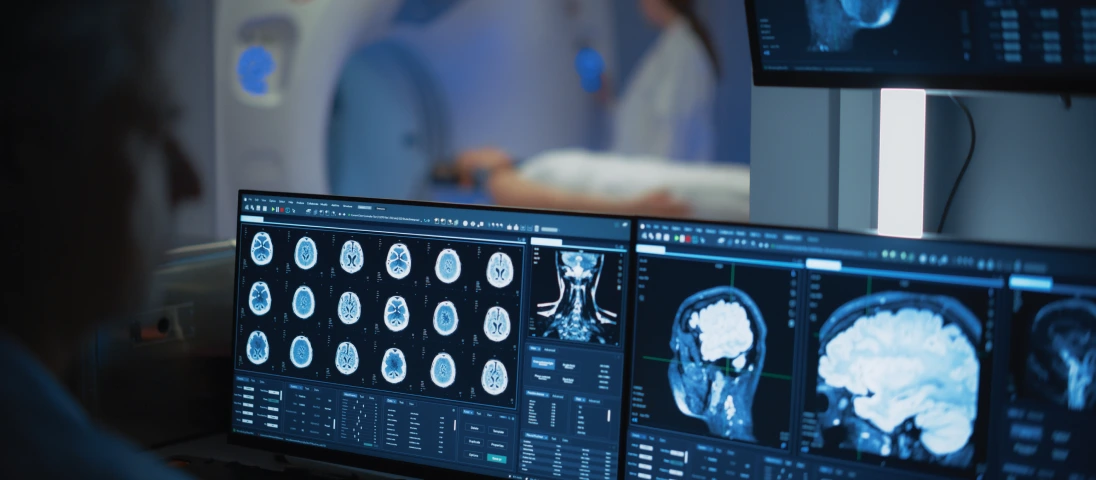
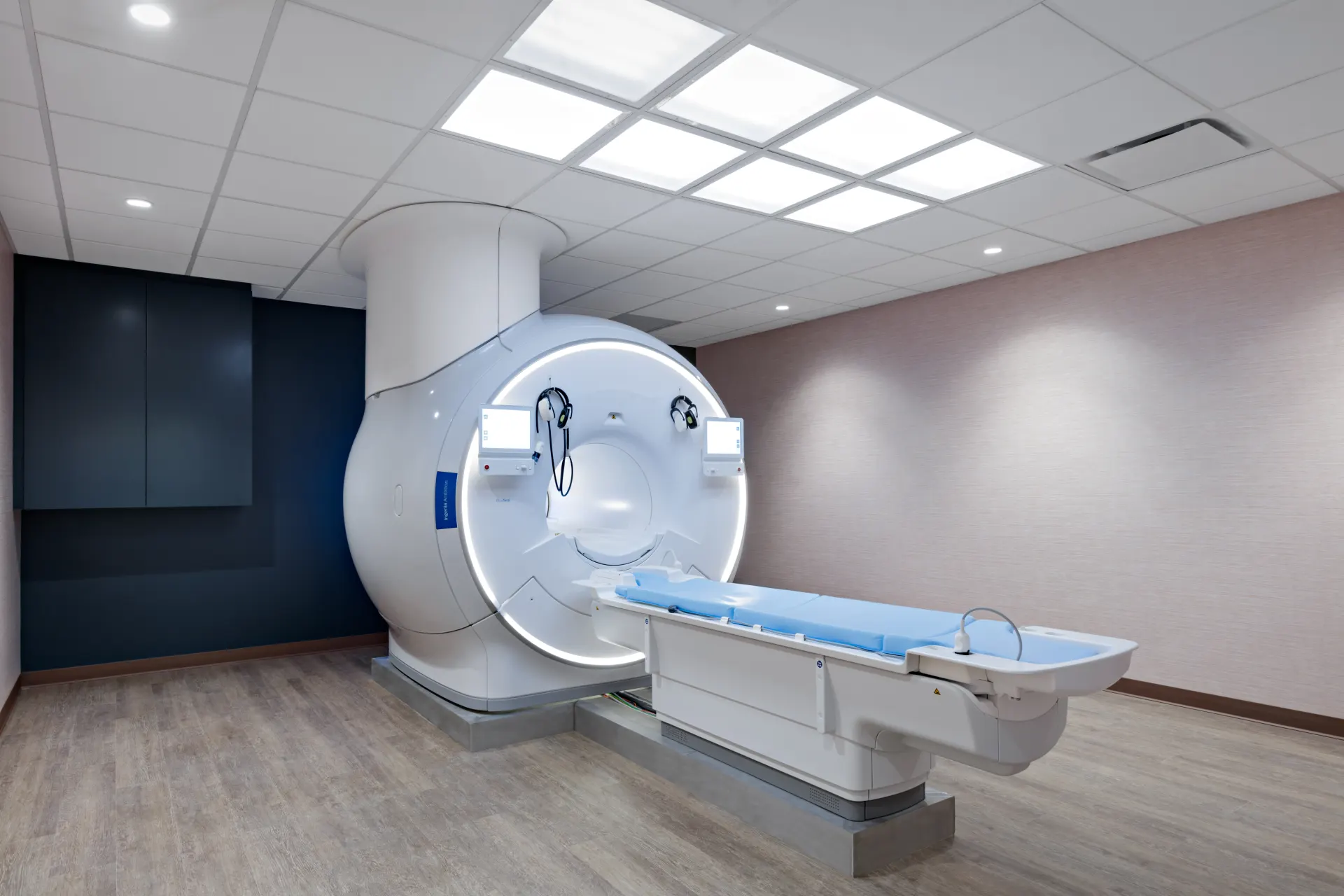
Dr. Adduci: We are looking for a lot of things. These exams in particular are very complex. They have a lot of images. You're in the magnet [the MRI] for 45 minutes to an hour. During that time period, the MRI generates thousands of images. It takes us quite a long time for a radiologist to review those images.
We're looking at everything from your head down to your ankles. We look at your anatomy, and we try to see if there's anything that looks off to us. It's all in black-and-white, grayscale images. We look for subtle differences in shades and patterns within and around the organs. And it's a lot of pattern recognition. For example, you've seen “Where's Waldo.” We’re looking for Waldo in each one of these exams. As we flip through thousands of images, there might only be two or three that show an abnormality. So we have to be very rigorous about how we look at the exams.
Prenuvo: How do you decide what abnormalities are actionable and what's just a normal variant?
Dr. Adduci: That's based on a lot of experience. We have a great group of exclusively-affiliated radiologists here at Prenuvo, which means we have a lot of cumulative experience in radiology. The more images you see, the more that you know. During our four-year residency, we see multiple normals and multiple abnormalities. Overall, we see more normals than abnormalities, thank goodness.
That training gives us a baseline. As a radiologist you know what you want to see, and then you know when something is off. From there, based on experience, you know if it's something that you've seen before and it's a benign condition, so there's nothing to worry about. When it’s something we don’t see very often and it looks abnormal, we want to look deeper into these.

Prenuvo: So what happens if something seems abnormal?
Dr. Adduci: We'll recommend additional diagnostic testing. Sometimes it's a CT, sometimes it's another MRI with contrast, or it might be an ultrasound. There are a number of different ways we can look at things. MRI in particular is great at looking at your soft tissues and your organs, ligaments, and tendons. CT is great for bones. Obviously, x-ray is good for bones, but MRI gives you a much more comprehensive picture of what's going on throughout the body.
Prenuvo: How do you know the difference between a normal variance vs. a potentially problematic one?
Dr. Adduci: We see many things that are different from other people, but they're not necessarily concerning. A lot of these things happen when you develop in utero. And some of these things happen that don't happen in everyone, but they’re not necessarily a bad thing. For example, the big vein in your abdomen, the inferior vena cava. For most people it's on one side, some people it could be on the other side. You don't see it very often, it can happen. It's something we note because if you ever have an intravenous procedure, a clinician might need that information. Otherwise, it's usually irrelevant. Some of us are a little different than others, and I think that's a good thing.
Prenuvo: What else do you think is important or valuable about what you do as radiologists?
Dr. Adduci: We like baselines. The more information we have, the more accurate we can be with our assessment. We're very rigorous about looking through everyone's prior studies [scans]. That's helpful, because maybe there's a disease you’re tracking and you want to know if the interventions you’re doing are working. For example, maybe you had some mild fatty infiltration on your first scan. You go back and make changes to your health. Then, you get a follow-up scan and we note that it's no longer there.
Prenuvo: What do you hope that patients take away about the role of radiologists in their health?
Dr. Adduci: I like patients to know that we are real physicians who are reading their exams. We are dedicated to getting them on the path to recovery or the next steps in their health journey. We are really invested in the process, and we care about the results. We want to do a good job, and we want to get them the best experience possible.
Prenuvo: Why do you think people associate MRI with fear or worst case scenarios?
Dr. Adduci: I think a lot of people associate MRI with someone being sick because that's the way traditional healthcare has done it. So there is fear in the word. We're trying to change that narrative. We're trying to say: ‘Come in before you're sick. Let's try to get a head start if there is anything wrong,’ or ‘everything looks good, so we'll see you again soon.’ MRI doesn't need to be scary. We should associate MRI with taking care of our health.
Prenuvo: How else is Prenuvo changing the narrative around MRI?
Dr. Adduci: There is a narrative that screening MRI is irresponsible because it generates unnecessary anxiety. I don't know if that's appropriate. We're trying to find a different way to do healthcare. We need to treat diseases earlier when they may be more amenable to intervention.
I think proactive MRI screening can be one step that makes a difference in our health. We should help detect things early so people can get the intervention they need to hopefully lead healthy, long lives.
Prenuvo: How do MRI and blood lab testing complement each other?
Dr. Adduci: MRI and blood markers are two pieces of information we use to better understand what's going on. Many times we'll see something abnormal in the blood work, and then as radiologists we'll look at the MRI for changes in a specific organ or part of your body that would match up with that and make sense.
Sometimes you have abnormal blood work and a normal MRI. In those cases, other tests might be done to try to figure out what's going on. The two tests complement each other, but they're not the be-all and end-all.
Prenuvo: In a way, this sounds like getting a second opinion.
Dr. Adduci: Yes, MRI and blood work are like our second opinions. They keep each other in check and give us a clearer picture of what's going on.
Prenuvo: Finally, how has your experience working in traditional healthcare differed from being at Prenuvo?
Dr. Adduci: I worked for two decades in traditional healthcare, and not everyone was happy to be there. Here at Prenuvo, people are genuinely happy to work here, and they're very passionate about the work we're doing, and it shows. I think that’s apparent to the patients that we scan.
This interview has been lightly edited for clarity. To learn more about the benefits of whole body MRI and Prenuvo Memberships, book a call with the Patient Services Team.