For years, so much of conversation around sleep has centered on one number: hours.
You may have heard seven hours, or eight, maybe even nine.
But new research from Prenuvo Research Network suggests there’s more to good sleep than simply how long you sleep.
In an analysis of more than 14,000 adults, researchers found that sleep duration and sleep efficiency showed associations with measures of brain structure and visceral adipose tissue, a type of fat stored around the abdominal organs.
The findings, developed in collaboration with sleep neuroscientist Dr. Matt Walker and Dr. Eti Ben Simon at the Centre of Brain Health, UT Dallas and accepted as a late-breaking abstract at Sleep Europe, raises an interesting question: When it comes to health, could how well you sleep be as important as how long you sleep?
“The key takeaway is that sleep duration and sleep efficiency are not interchangeable,” said Dr. Alex Exuzides, MD, PhD, VP of Research and HEOR at Prenuvo. “By pairing standardized, self-reported sleep measures with MRI-derived measures of brain structure and visceral fat in more than 14,000 people, we can begin to understand how different dimensions of sleep may relate to different aspects of health.”
*These findings are from a Prenuvo research study and not a part of a patient’s Prenuvo Report.
More sleep and better sleep aren’t necessarily the same
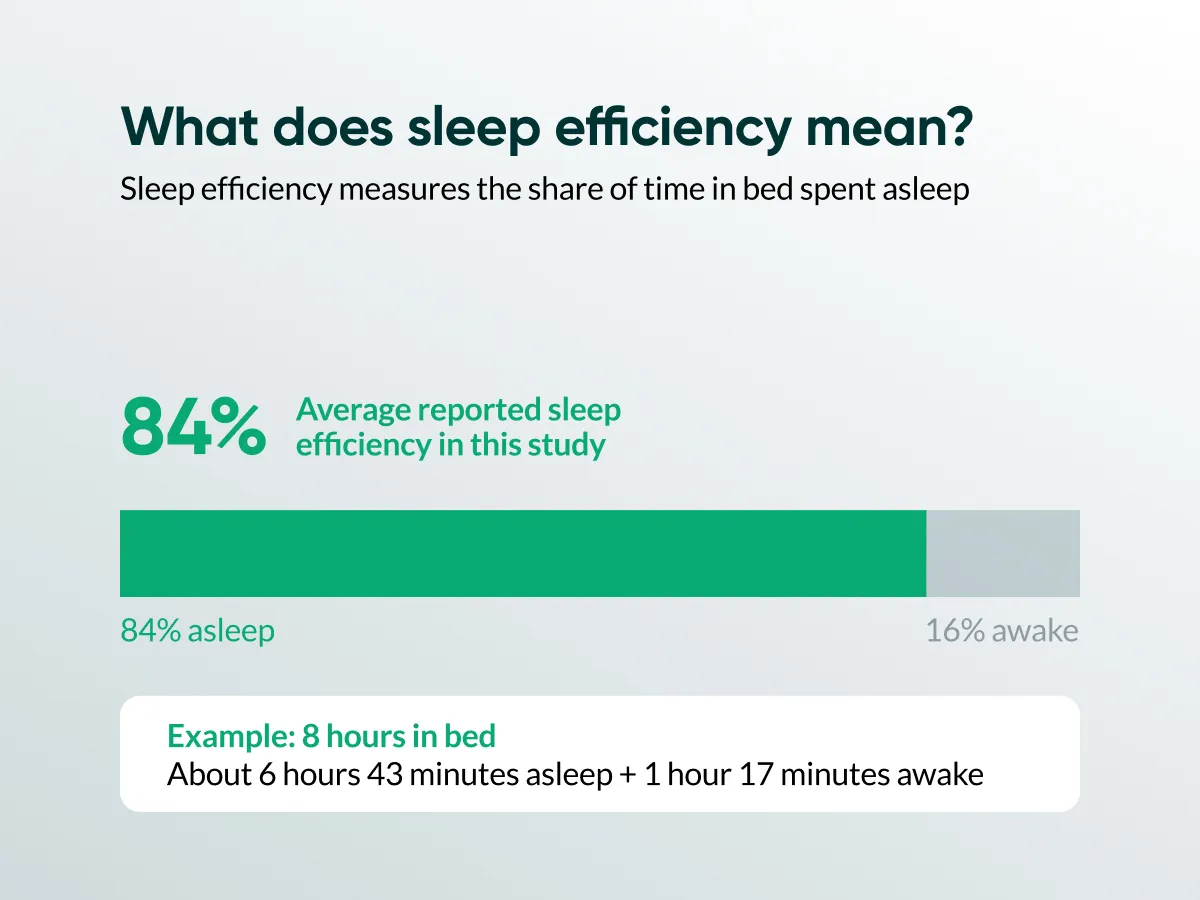
Sleep duration is straightforward: the number of hours a person reports sleeping.
But sleep efficiency captures something different. It measures the percentage of time spent in bed that is actually spent asleep. Someone might spend eight hours in bed, for example, while spending a meaningful portion of that time awake (reading or scrolling through social media) or experiencing fragmented sleep.
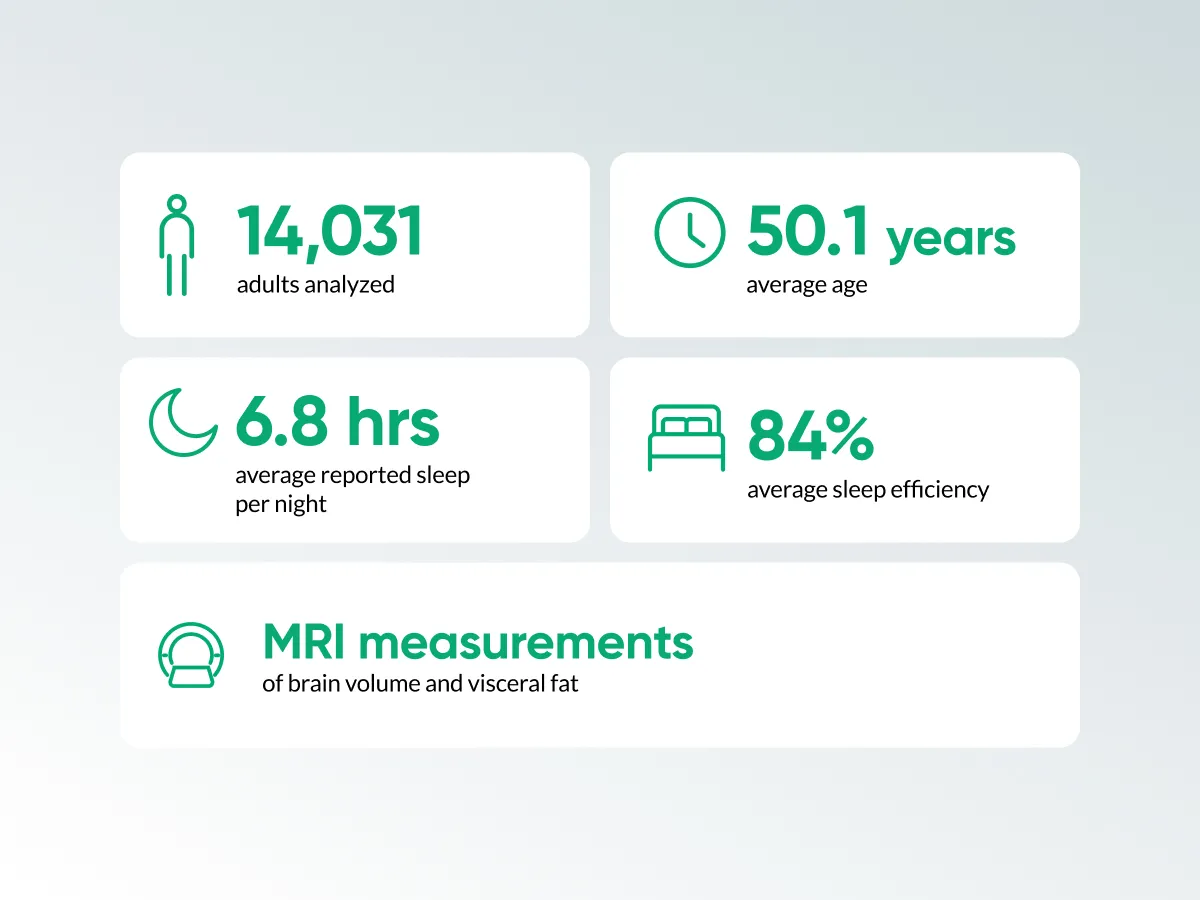
Researchers analyzed both measures independently using data from 14,031 adults undergoing Prenuvo whole body MRI.
Participants had an average age of 50.1 years, with 58.4% men and 41.5% women. Their average BMI was 28.7. On average, participants reported sleeping 6.8 hours per night, with an average sleep efficiency of 84%.
Sleep measurements were self-reported from questions based on the Pittsburgh Sleep Quality Index, a widely used validated sleep questionnaire.
The researchers then compared those responses with MRI-derived measurements of the brain and visceral adipose tissue.
What the MRI data showed
Brain imaging was used to measure total and regional gray matter volumes, including the hippocampus and amygdala, as well as an Alzheimer’s disease-related brain signature. Abdominal MRI was used to quantify visceral fat.
Related research: Deep Learning Derived Visceral Abdominal Fat Predicts Brain Atrophy at Midlife in 10,001 Individuals
The models accounted for factors including age, sex, BMI, scanner location and intracranial volume (the total size or capacity of the skull), allowing researchers to examine the independent associations of sleep duration and sleep efficiency.
Several patterns stood out.
Better sleep efficiency was most strongly associated with gray matter in a region tied to attention
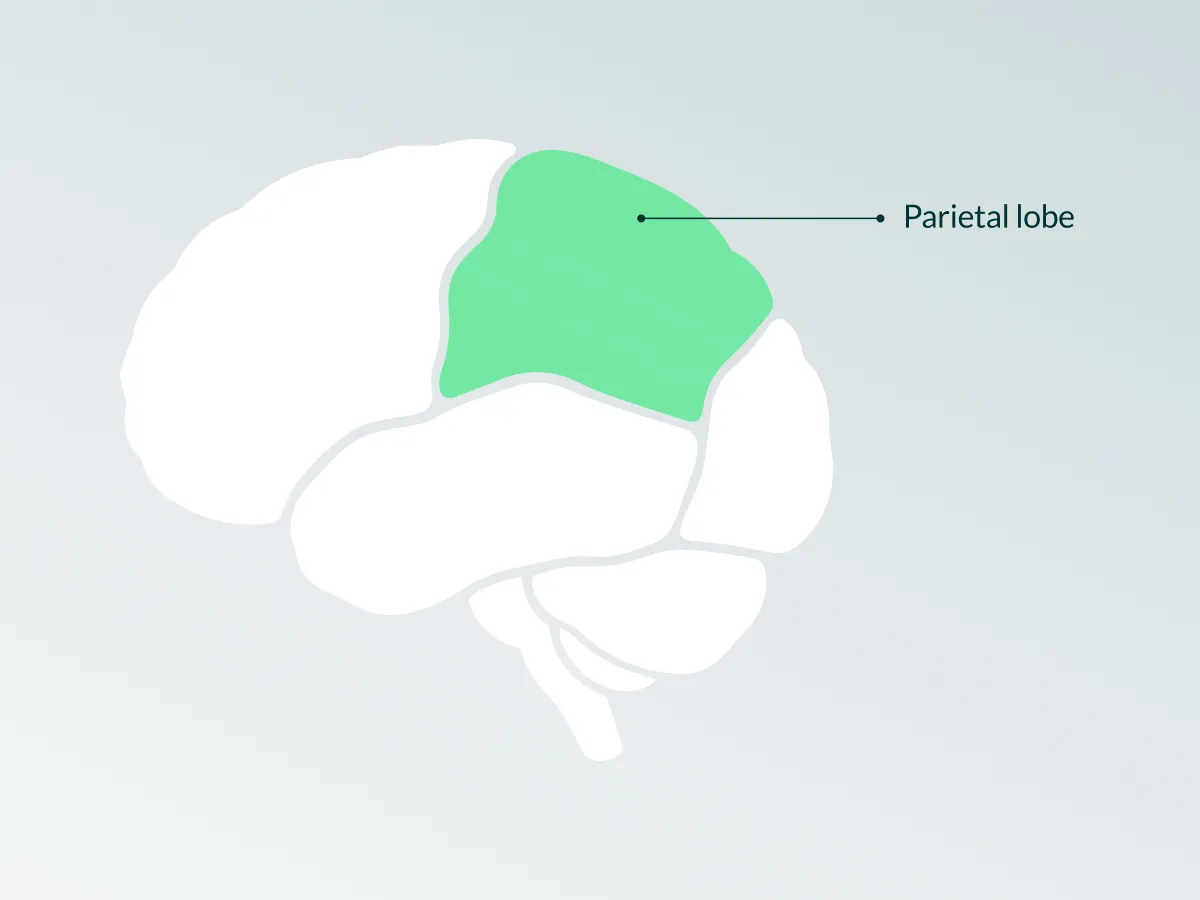
Among the brain measurements examined, higher sleep efficiency was most associated with grey matter in the parietal lobe.
Gray matter contains many of the brain’s nerve cells and helps process and interpret information. The parietal lobe, located towards the upper back part of the brain, plays a role in attention, sensory processing, and spatial awareness.
In other words, people who reported more consolidated, efficient sleep were associated with slightly greater gray matter volume in this region.
The study does not show that better sleep efficiency causes these differences in brain structure. Because the research looked at sleep and MRI measurements at a single point in time, it can only show an association.
Longer sleep was associated with smaller hippocampal volume, a brain region important for memory
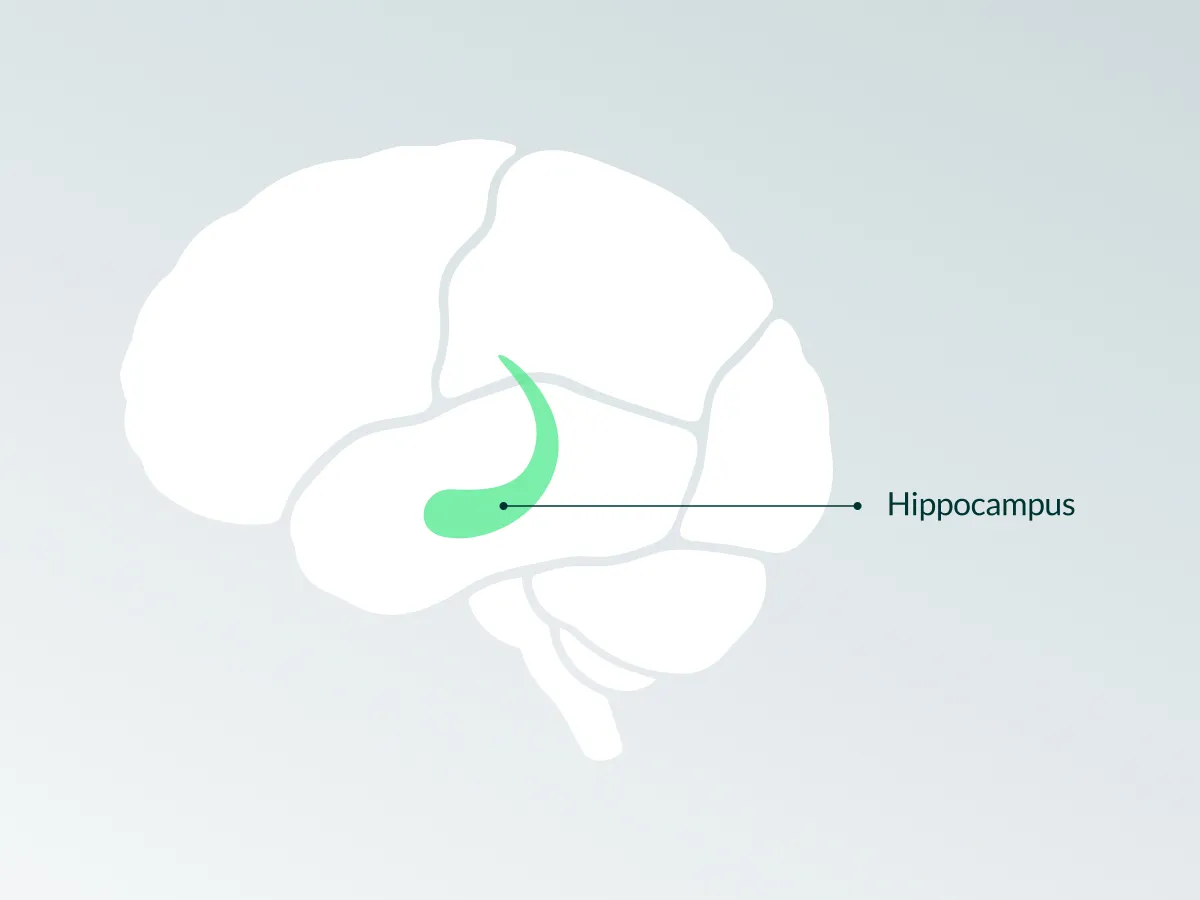
When researchers looked at sleep duration, they found a different pattern. People who reported sleeping longer than nine hours tended to have smaller hippocampal volume.
The hippocampus is a small region deep in the brain that plays a central role in memory and learning. Hippocampal volume simply refers to the amount of space that region occupies when measured on an MRI.
When researchers repeated the analysis after excluding people who reported sleeping more than eight hours, the relationship between sleep duration and hippocampal volume became weaker and was no longer statistically significant after accounting for multiple comparisons. Because sleep duration was self-reported rather than objectively measured, longer reported sleep may partly reflect more time spent in bed rather than more time actually asleep. This may help explain why the hippocampal association was more sensitive to the inclusion of long sleepers. Longer sleep can also reflect many things, including fragmented sleep, sleep disorders, medication use, or underlying conditions. Because this study measured sleep and brain structure at a single point in time, researchers cannot determine what is driving the association.
There’s another reason sleep duration alone can be difficult to interpret: more hours of sleep do not necessarily mean more restorative sleep.
Related: How your brain changes with age
Sleep duration and efficiency also differed in their relationship with visceral fat
Perhaps the clearest contrast appeared outside the brain.
Sleep duration and sleep efficiency showed associations with visceral fat in opposite directions.
Sleep duration greater than nine hours was associated with greater visceral fat.
Higher sleep efficiency, meanwhile, was associated with lower visceral fat.
The visceral fat findings were more consistent. Even after researchers excluded people reporting more than eight hours of sleep, longer sleep duration remained associated with greater visceral fat, while higher sleep efficiency remained associated with lower visceral fat. This suggests that these relationships were not simply being driven by the longest sleepers.
Visceral fat sits deeper in the abdomen than the fat directly beneath the skin and surrounds internal organs. Higher levels have been associated in previous research with increased inflammation and metabolic risk.
Again, the study does not demonstrate that inefficient sleep produces visceral fat—or that visceral fat causes poor sleep. It identifies a relationship that warrants further investigation.
Related: 3 surprising facts Prenuvo data shows about belly fat—and how to reduce it

A large dataset, but important limitations
The scale of the research is notable. Studies examining detailed brain imaging, body composition and sleep characteristics often involve substantially smaller populations.
Here, researchers were able to examine both brain and metabolic measurements in more than 14,000 people.
But size doesn’t eliminate the study’s limitations.
Sleep duration and efficiency were self-reported rather than measured objectively through a sleep study or wearable device. And because the analysis was cross-sectional, it cannot establish cause and effect.
The effect sizes were also small. The sleep measures explained only a limited amount of the overall variation in imaging outcomes.
That makes the findings less of a prescription and more of a starting point.
Future research could follow people over time, use repeated MRI scans, incorporate objective sleep measurements, and investigate whether associations differ by age, sex, BMI, sleep disorders or cardiometabolic health.
For now, the study reinforces a more nuanced way of thinking about sleep.
The number of hours on the clock may not tell the whole story. Sleep duration and how efficiently those hours are spent asleep may offer a different window into brain and metabolic health.
What this could mean for your sleep
The findings reinforce an important detail: sleep duration and sleep efficiency are not the same thing.
In this study, longer reported sleep was associated with greater visceral fat and smaller hippocampal volume, while higher sleep efficiency was associated with lower visceral fat and greater parietal gray matter volume. When the researchers excluded people sleeping more than eight hours, the hippocampal relationship became weaker, while the visceral fat findings remained. Together, the results reinforce that sleep duration and sleep efficiency may provide different information about brain and metabolic health.
Because the study was observational, it cannot tell us why those relationships exist. Longer sleep may sometimes reflect fragmented sleep, sleep disorders, medication use or underlying health conditions. Even so, the findings add to a growing body of research suggesting that how we sleep may be more meaningfully connected with both brain and metabolic health.
For people looking to improve sleep efficiency, the focus is on making the time spent in bed more consistently restful. That can include:
- Keeping a consistent sleep and wake schedule
- Creating a cool, dark and quiet sleep environment
- Limiting caffeine later in the day and alcohol close to bedtime
- Staying physically active during the day
- Paying attention to persistent awakenings, snoring, daytime sleepiness or feeling unrefreshed despite getting enough sleep
If those issues are ongoing, they may be worth discussing with a healthcare professional.
Related: How poor sleep affects your body
Want a deep look at your brain and metabolic health?
Prenuvo may help provide additional insight into areas explored in this research. A Whole Body Scan can offer a broad look at your health, Body Composition Analysis can measure visceral fat and other body composition markers, and the Advanced Brain Health Scan can help provide detailed information about the brain structure.
To learn more about the benefits of Prenuvo imaging, book a call with a member of our Patient Services Team.